Skip to content
The Pay Path
From Draft to Arbitration
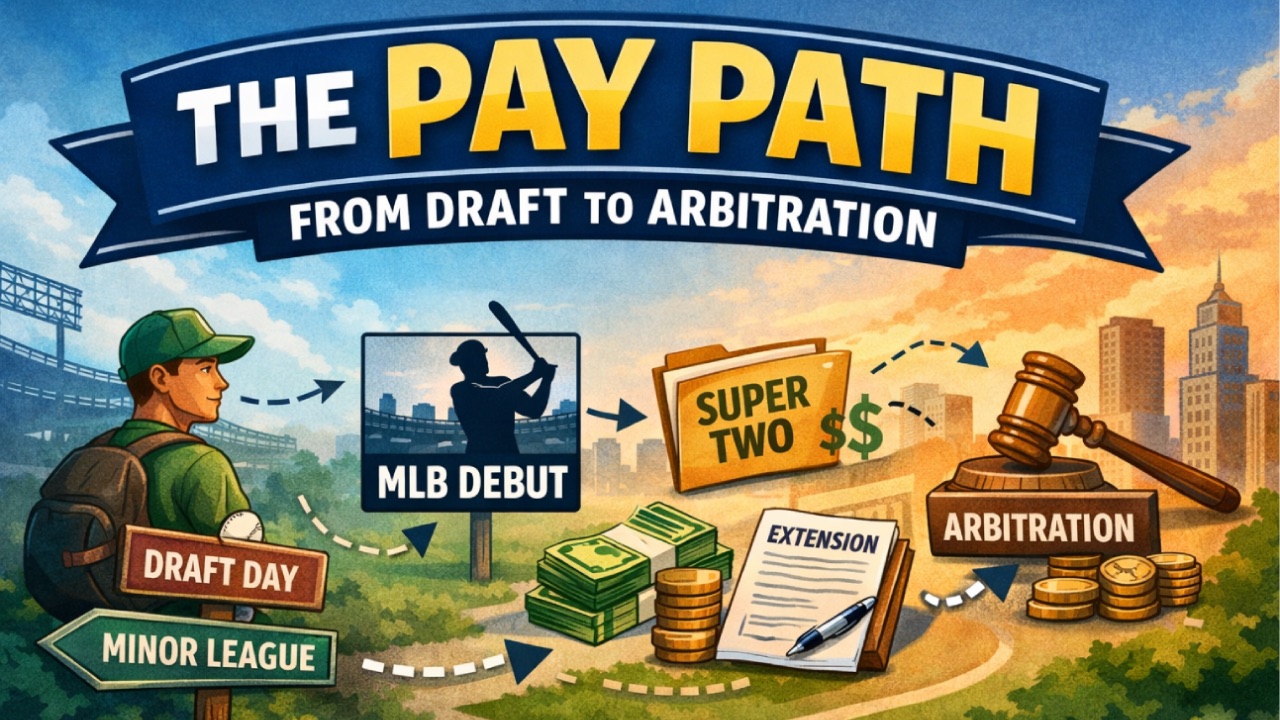
Most professional baseball players never negotiate a contract. Not because they lack talent, but because the system delays pay, limits leverage, and rewards timing as much as performance.
This path explains how players earn their first paychecks, why minor league salaries stay low for so long, and what it actually takes to reach arbitration. Long before free agency enters the picture, careers are shaped by service time, roster decisions, and years of team control.
Understanding this journey changes how you view call-ups, extensions, non-tenders, and why so many players disappear just as they seem close to a payday.
⸻
Start Here
Follow a player’s journey from signing bonus to league minimums, pre-arbitration seasons, and the first real raises that come with arbitration eligibility.
This piece lays the foundation for how minor league deals work, why control lasts so long, and how players move, slowly and often painfully, toward earning power.
→ Read next: From Draft to Payday: How Baseball Players Get Paid
⸻
→ Back to: Prospect to Paycheck: Contracts, Arbitration, and Player Leverage in Baseball